

Smartphone-based AI to monitor child nutrition
[01]
By combining computer vision, anthropometric measurements, and deep-learning models, AIMM explores how undernutrition can be screened more quickly, less invasively, and at larger scale in low-resource settings.

- computer vision
- RGB images
- anthropometry
- pose estimation
- segmentation
- weight
- height
- MUAC
- child nutrition
- deeep learning
- low spec smartphones
- intuitive app design
- low cost
- accurate
- community-led
- scalable
Smartphone-based AI to monitor child nutrition
[01]
By combining computer vision, anthropometric measurements, and deep-learning models, AIMM explores how undernutrition can be screened more quickly, less invasively, and at larger scale in low-resource settings.
- computer vision
- RGB images
- anthropometry
- pose estimation
- segmentation
- weight
- height
- MUAC
- child nutrition
- deeep learning
- low spec smartphones
- intuitive app design
- low cost
- accurate
- community-led
- scalable
Smartphone-based AI to monitor child nutrition
[01]
By combining computer vision, anthropometric measurements, and deep-learning models, AIMM explores how undernutrition can be screened more quickly, less invasively, and at larger scale in low-resource settings.
- computer vision
- RGB images
- anthropometry
- pose estimation
- segmentation
- weight
- height
- MUAC
- child nutrition
- deeep learning
- low spec smartphones
- intuitive app design
- low cost
- accurate
- community-led
- scalable
From Problem To Prototype
[Play]
From Problem To Prototype
[Play]
From Problem To Prototype
How AIMM Works
[02]
Capture
Low spec phones, various lightning & camera conditions
Segmentation
Body isolation
Pose detection
Landmark identification
Feature extraction
Distance & ratio computation
Classification
Model inference
Feedback
Display result
How AIMM Works
[02]
Capture
Segmentation
Pose detection
Feature extraction
Classification
Feedback
How AIMM Works
[02]
Capture
Web Development
Pose detection
Feature extraction
Classification
Feedback
[03]
Workflow
[001]
Identify
We identify a need for accurate, real-tme, low-cost, scalable solutions to monitor child malnutrition.
6 months
[002]
Conceive
Design the study workflow, image-capture protocol, consent process, and data pipeline to account for use in real field conditions.
6 months
[003]
Build
Develop the front-end smartphone app and back-end AI model, implement quality checks, and create a dashboard iteratively, refining the system after each round of field testing.
12-18 months
[004]
Pilot
Test the ptototype with households, Anganwadi workers, and caregivers in Maharashtra to assess accuracy, and feasibility.
3 months
[005]
Validate & Test
We compare AI outputs with standard anthropometric measurements, evaluate accuracy and fairness, and improve the model before wider use.
6 months
[006]
Launch
Deploy the tool and documentation gopt uptake by project partners and other stakeholders.
6 months
[03]
Workflow
[001]
Identify
We identify a need for accurate, real-tme, low-cost, scalable solutions to monitor child malnutrition.
6 months
[002]
Conceive
Design the study workflow, image-capture protocol, consent process, and data pipeline to account for use in real field conditions.
6 months
[003]
Build
Develop the front-end smartphone app and back-end AI model, implement quality checks, and create a dashboard iteratively, refining the system after each round of field testing.
12-18 months
[004]
Pilot
Test the ptototype with households, Anganwadi workers, and caregivers in Maharashtra to assess accuracy, and feasibility.
3 months
[005]
Validate & Test
We compare AI outputs with standard anthropometric measurements, evaluate accuracy and fairness, and improve the model before wider use.
6 months
[006]
Launch
Deploy the tool and documentation gopt uptake by project partners and other stakeholders.
6 months
[03]
Workflow
[001]
Identify
We identify a need for accurate, real-tme, low-cost, scalable solutions to monitor child malnutrition.
6 months
[002]
Conceive
Design the study workflow, image-capture protocol, consent process, and data pipeline to account for use in real field conditions.
6 months
[003]
Build
Develop the front-end smartphone app and back-end AI model, implement quality checks, and create a dashboard iteratively, refining the system after each round of field testing.
12-18 months
[004]
Pilot
Test the ptototype with households, Anganwadi workers, and caregivers in Maharashtra to assess accuracy, and feasibility.
3 months
[005]
Validate & Test
We compare AI outputs with standard anthropometric measurements, evaluate accuracy and fairness, and improve the model before wider use.
6 months
[006]
Launch
Deploy the tool and documentation gopt uptake by project partners and other stakeholders.
6 months
[04]
AIMM & Related Projects
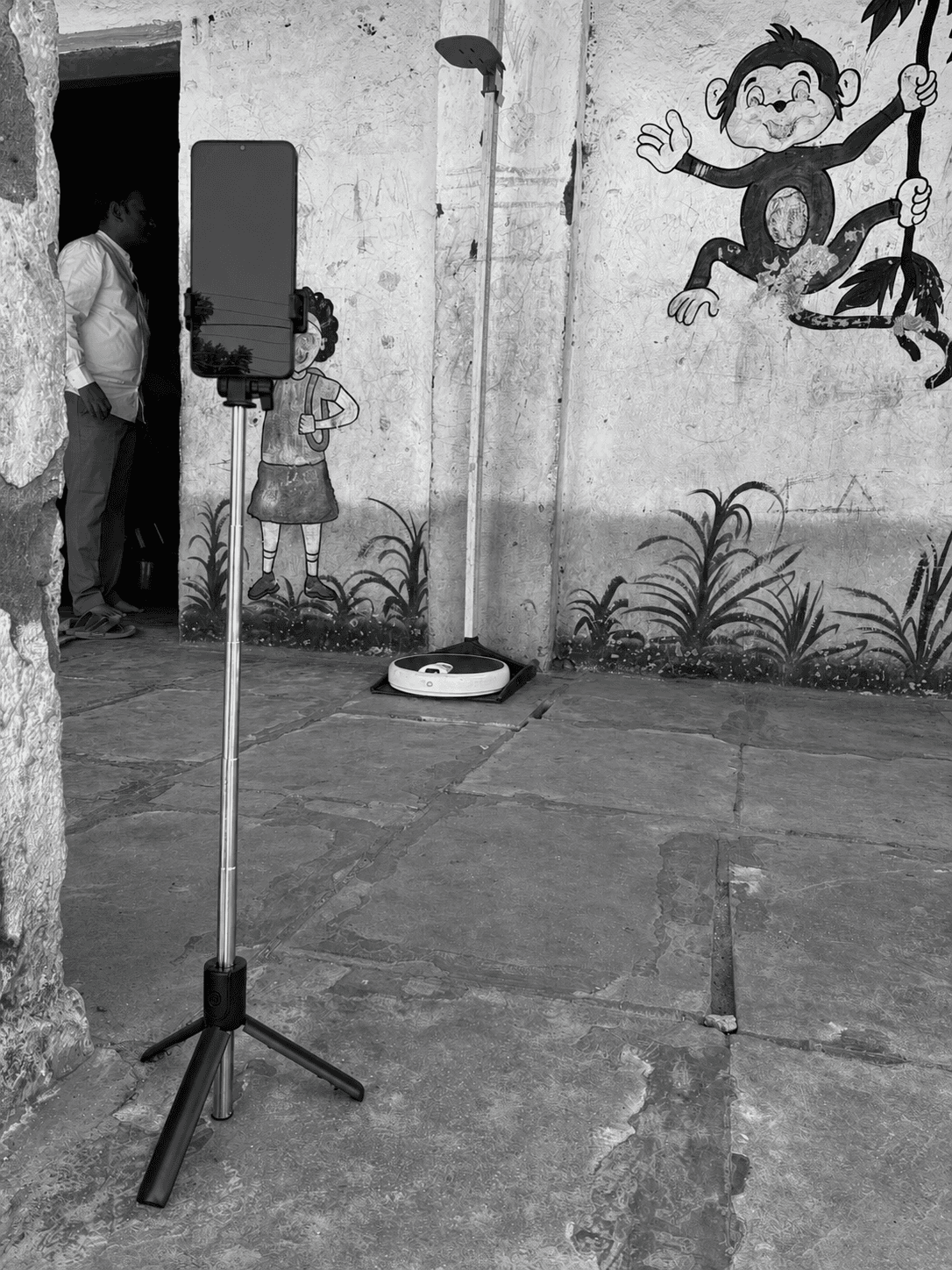
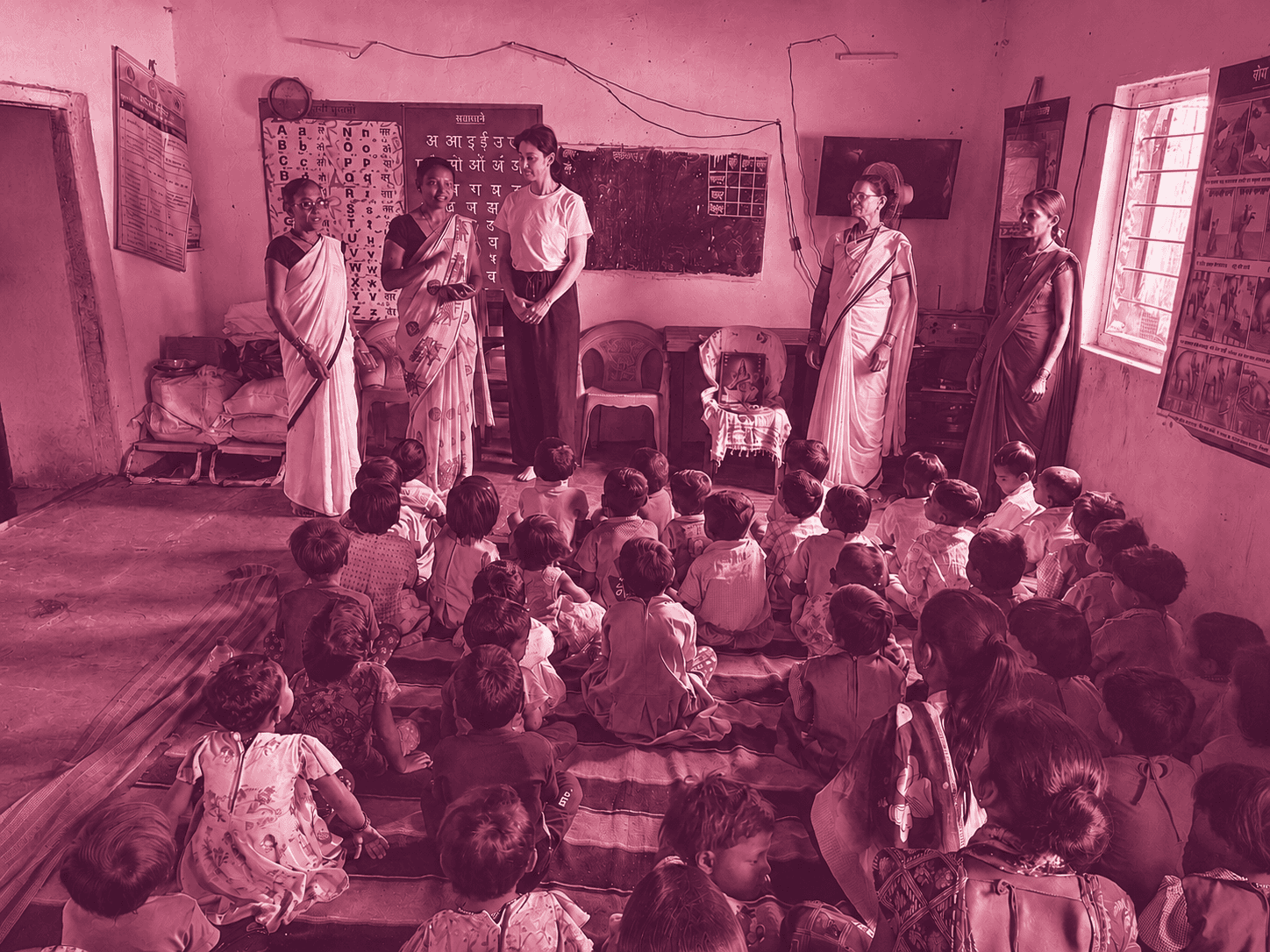
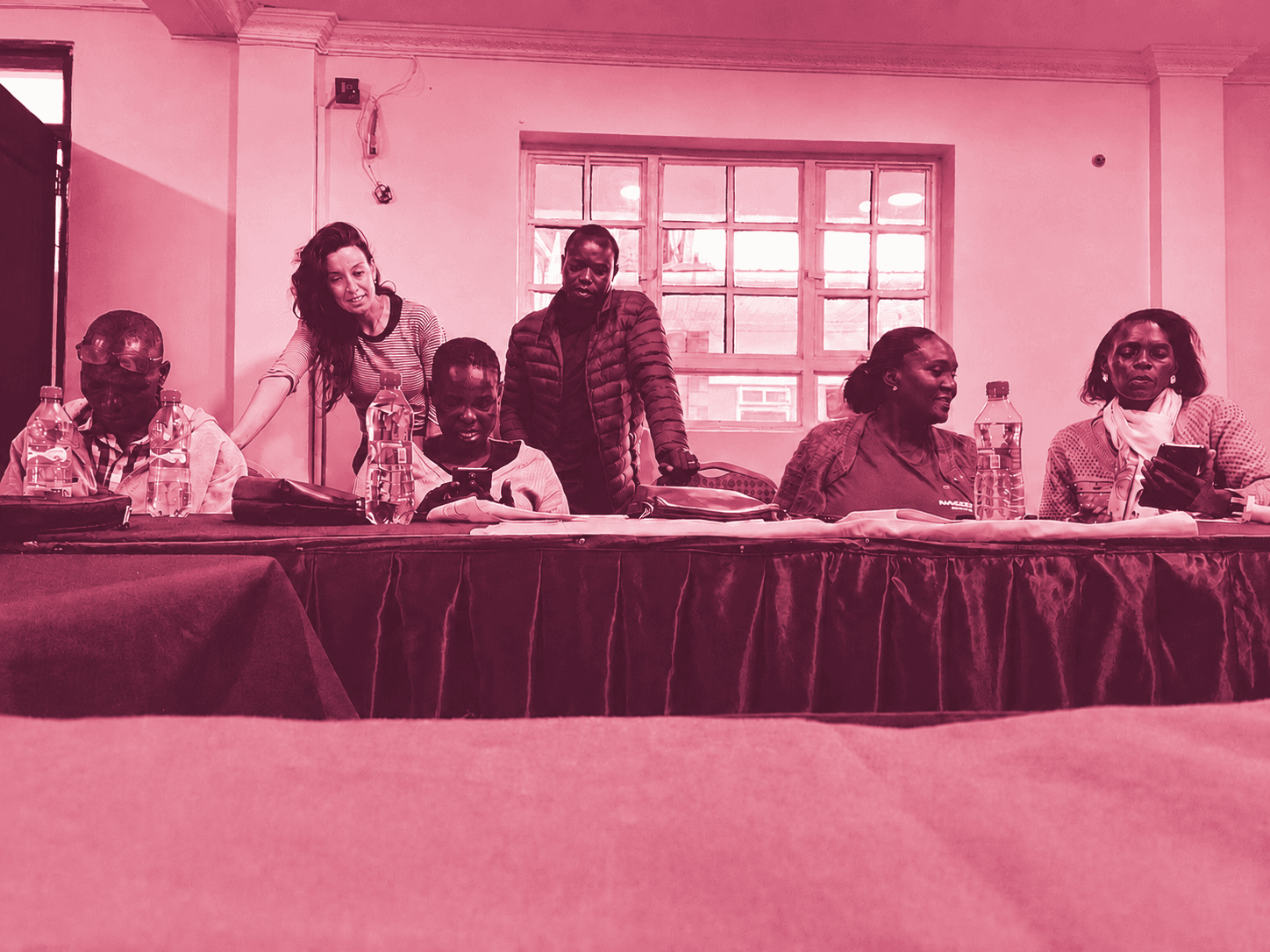
AIMM and its precursors connect smart phone enabled data collection, AI model development, field validation, and policy-oriented analysis. Together, they comprise a holistic approach to improving child nutrition monitoring, from generating high-quality evidence to translating insights into real-time, low-cost, scalable public health tools.
Sensitivity
Correct identification of malnourished children (True Positive Rate)
Specificity
Correct identification of non-malnourished children (True Negative Rate)
Cost to administer
A fraction of pen-and-paper surveys
faster
Based on a comparison of real-time metrics to survey resutls with 6-month lag



[04]
AIMM & Related Projects
AIMM and its precursors connect smart phone enabled data collection, AI model development, field validation, and policy-oriented analysis. Together, they comprise a holistic approach to improving child nutrition monitoring, from generating high-quality evidence to translating insights into real-time, low-cost, scalable public health tools.
Sensitivity
Correctly identification of malnoourished childen (True Positive Rate)
Specificity
Correctl identification of non-malnourished children (True Negative Rate).
Cost to administer
A fraction of pen-and-paper surveys
faster
Based on a comparison of real-time metrics to survey resutls with 6-month lag
[04]
AIMM & Related Projects
AIMM and its precursors connect smart phone enabled data collection, AI model development, field validation, and policy-oriented analysis. Together, they comprise a holistic approach to improving child nutrition monitoring, from generating high-quality evidence to translating insights into real-time, low-cost, scalable public health tools.
Sensitivity
Correct identification of malnourished children (True Positive Rate)
Specificity
Correct identification of non-malnourished children (True Negative Rate)
Cost to administer
A fraction of pen-and-paper surveys
faster
Based on a comparison of real-time metrics to survey resutls with 6-month lag
Publications
[05]
2026 | Frontiers in Public Health
2023 | Frontiers in Sustainable Food Systems
2023 | Humanities and Social Sciences Communications


Publications
[05]
2026 | Frontiers in Public Health
2023 | Frontiers in Sustainable Food Systems
2023 | Humanities and Social Sciences Communications
Publications
[05]
Publications
2026 | Frontiers in Public Health
2023 | Frontiers in Sustainable Food Systems
2023 | Humanities and Social Sciences Communications
FAQ
[06]
What problem does AIMM address?
AIMM addresses the need for faster, lower-cost, and more accurate child nutrition screening, particularly in hard-to-reach, crisis-affected, or otherwise resource-constrained settings. Current nutrition assessments often require trained personnel, physical measurement tools, and repeated field visits, which can limit coverage during emergencies, displacement, or pandemic-related restrictions. AIMM explores whether smartphone-based images can help estimate key indicators of child undernutrition and support low-cost, near-real-time identification of children at risk.
Who is AIMM designed for?
The app is being developed so that caregivers and families can monitor child nutrition using a standard smartphone, with minimal equipment and guidance. Drawing on prior experience with emoji-based questionnaires and culturally appropriate interface designs in Kenya, AIMM will place strong emphasis on intuitive, low-literacy, and locally appropriate user interaction. The app interface will be refined together with rural households and caregivers to ensure that it is easy to understand and use in everyday settings.
Where is AIMM being developed and tested?
AIMM is being developed and tested in Maharashtra, India. In the first phase, the study will sample approximately 7,000 children across five districts — Dhule, Chandrapur, Nagpur, Jalgaon, and Beed — to train and validate the app. In a second phase, AIMM will be tested in Pune district with 150 households over a period of 12 months.
When will the beta version of AIMM be launched?
We will launch a beta version of AIMM for pilot testing by 2028. This beta version will be developed and refined through field validation in Maharashtra, India, using smartphone-based image capture, anthropometric measurements, and user feedback from households and frontline implementation settings. The first beta will be intended for research and pilot use, not yet for routine clinical or diagnostic deployment.
What is your licensing strategy?
Our licensing strategy is to keep AIMM accessible for public-interest use, especially by researchers, public health institutions, and implementation partners working on child nutrition. The exact licensing model will be finalized after validation and IP review. Our current approach is to: enable non-commercial research and public health use under clear access conditions; protect sensitive components such as child image data, trained models, and validation datasets; allow controlled collaboration with academic, government, and implementation partners; prevent misuse, unvalidated clinical deployment, or commercial use without permission; support future scale-up in India and other low-resource settings through responsible licensing agreements. AIMM is being developed as a research-based digital public health tool. Any licensing decision will prioritize ethical use, data protection, scientific transparency, and broad public health benefit.
Do you develop in-house?
Yes. AIMM is developed in-house by the project team, with technical and research support from partner institutions. The AI model, app design, validation strategy, and research workflow are led by the AIMM team at the Geneva Graduate Institute, in collaboration with FLAME University and technical partners in India. We also work with field teams and users during pilot testing to refine the app for real-world use. This allows us to keep close control over the scientific methods, data protection standards, and public health objectives of the tool.
Contact us
Get in touch with any questions.
Nina Link

FAQ
[06]
What problem does AIMM address?
AIMM addresses the need for faster, lower-cost, and more accurate child nutrition screening, particularly in hard-to-reach, crisis-affected, or otherwise resource-constrained settings. Current nutrition assessments often require trained personnel, physical measurement tools, and repeated field visits, which can limit coverage during emergencies, displacement, or pandemic-related restrictions. AIMM explores whether smartphone-based images can help estimate key indicators of child undernutrition and support low-cost, near-real-time identification of children at risk.
Who is AIMM designed for?
The app is being developed so that caregivers and families can monitor child nutrition using a standard smartphone, with minimal equipment and guidance. Drawing on prior experience with emoji-based questionnaires and culturally appropriate interface designs in Kenya, AIMM will place strong emphasis on intuitive, low-literacy, and locally appropriate user interaction. The app interface will be refined together with rural households and caregivers to ensure that it is easy to understand and use in everyday settings.
Where is AIMM being developed and tested?
AIMM is being developed and tested in Maharashtra, India. In the first phase, the study will sample approximately 7,000 children across five districts — Dhule, Chandrapur, Nagpur, Jalgaon, and Beed — to train and validate the app. In a second phase, AIMM will be tested in Pune district with 150 households over a period of 12 months.
When will the beta version of AIMM be launched?
We will launch a beta version of AIMM for pilot testing by 2028. This beta version will be developed and refined through field validation in Maharashtra, India, using smartphone-based image capture, anthropometric measurements, and user feedback from households and frontline implementation settings. The first beta will be intended for research and pilot use, not yet for routine clinical or diagnostic deployment.
What is your licensing strategy?
Our licensing strategy is to keep AIMM accessible for public-interest use, especially by researchers, public health institutions, and implementation partners working on child nutrition. The exact licensing model will be finalized after validation and IP review. Our current approach is to: enable non-commercial research and public health use under clear access conditions; protect sensitive components such as child image data, trained models, and validation datasets; allow controlled collaboration with academic, government, and implementation partners; prevent misuse, unvalidated clinical deployment, or commercial use without permission; support future scale-up in India and other low-resource settings through responsible licensing agreements. AIMM is being developed as a research-based digital public health tool. Any licensing decision will prioritize ethical use, data protection, scientific transparency, and broad public health benefit.
Do you develop in-house?
Yes. AIMM is developed in-house by the project team, with technical and research support from partner institutions. The AI model, app design, validation strategy, and research workflow are led by the AIMM team at the Geneva Graduate Institute, in collaboration with FLAME University and technical partners in India. We also work with field teams and users during pilot testing to refine the app for real-world use. This allows us to keep close control over the scientific methods, data protection standards, and public health objectives of the tool.
Contact us
Get in touch with any questions.
Nina Link
FAQ
[06]
What problem does AIMM address?
AIMM addresses the need for faster, lower-cost, and more accurate child nutrition screening, particularly in hard-to-reach, crisis-affected, or otherwise resource-constrained settings. Current nutrition assessments often require trained personnel, physical measurement tools, and repeated field visits, which can limit coverage during emergencies, displacement, or pandemic-related restrictions. AIMM explores whether smartphone-based images can help estimate key indicators of child undernutrition and support low-cost, near-real-time identification of children at risk.
Who is AIMM designed for?
The app is being developed so that caregivers and families can monitor child nutrition using a standard smartphone, with minimal equipment and guidance. Drawing on prior experience with emoji-based questionnaires and culturally appropriate interface designs in Kenya, AIMM will place strong emphasis on intuitive, low-literacy, and locally appropriate user interaction. The app interface will be refined together with rural households and caregivers to ensure that it is easy to understand and use in everyday settings.
Where is AIMM being developed and tested?
AIMM is being developed and tested in Maharashtra, India. In the first phase, the study will sample approximately 7,000 children across five districts — Dhule, Chandrapur, Nagpur, Jalgaon, and Beed — to train and validate the app. In a second phase, AIMM will be tested in Pune district with 150 households over a period of 12 months.
When will the beta version of AIMM be launched?
We will launch a beta version of AIMM for pilot testing by 2028. This beta version will be developed and refined through field validation in Maharashtra, India, using smartphone-based image capture, anthropometric measurements, and user feedback from households and frontline implementation settings. The first beta will be intended for research and pilot use, not yet for routine clinical or diagnostic deployment.
What is your licensing strategy?
Our licensing strategy is to keep AIMM accessible for public-interest use, especially by researchers, public health institutions, and implementation partners working on child nutrition. The exact licensing model will be finalized after validation and IP review. Our current approach is to: enable non-commercial research and public health use under clear access conditions; protect sensitive components such as child image data, trained models, and validation datasets; allow controlled collaboration with academic, government, and implementation partners; prevent misuse, unvalidated clinical deployment, or commercial use without permission; support future scale-up in India and other low-resource settings through responsible licensing agreements. AIMM is being developed as a research-based digital public health tool. Any licensing decision will prioritize ethical use, data protection, scientific transparency, and broad public health benefit.
Do you develop in-house?
Yes. AIMM is developed in-house by the project team, with technical and research support from partner institutions. The AI model, app design, validation strategy, and research workflow are led by the AIMM team at the Geneva Graduate Institute, in collaboration with FLAME University and technical partners in India. We also work with field teams and users during pilot testing to refine the app for real-world use. This allows us to keep close control over the scientific methods, data protection standards, and public health objectives of the tool.
Contact us
Get in touch with any questions.
Nina Link
Smartphone-based AI to monitor child nutrition
[01]
By combining computer vision, anthropometric measurements, and deep-learning models, AIMM explores how undernutrition can be screened more quickly, less invasively, and at larger scale in low-resource settings.
- computer vision
- RGB images
- anthropometry
- pose estimation
- segmentation
- weight
- height
- MUAC
- child nutrition
- deeep learning
- low spec smartphones
- intuitive app design
- low cost
- accurate
- community-led
- scalable
Smartphone-based AI to monitor child nutrition
[01]
By combining computer vision, anthropometric measurements, and deep-learning models, AIMM explores how undernutrition can be screened more quickly, less invasively, and at larger scale in low-resource settings.
- computer vision
- RGB images
- anthropometry
- pose estimation
- segmentation
- weight
- height
- MUAC
- child nutrition
- deeep learning
- low spec smartphones
- intuitive app design
- low cost
- accurate
- community-led
- scalable
Smartphone-based AI to monitor child nutrition
[01]
By combining computer vision, anthropometric measurements, and deep-learning models, AIMM explores how undernutrition can be screened more quickly, less invasively, and at larger scale in low-resource settings.
- computer vision
- RGB images
- anthropometry
- pose estimation
- segmentation
- weight
- height
- MUAC
- child nutrition
- deeep learning
- low spec smartphones
- intuitive app design
- low cost
- accurate
- community-led
- scalable
From Problem To Prototype
[Play]
From Problem To Prototype
[Play]
From Problem To Prototype
How AIMM Works
[02]
Capture
Low spec phones, various lightning & camera conditions
Segmentation
Body isolation
Pose detection
Landmark identification
Feature extraction
Distance & ratio computation
Classification
Model inference
Feedback
Display result
How AIMM Works
[02]
Capture
Segmentation
Pose detection
Feature extraction
Classification
Feedback
How AIMM Works
[02]
Capture
Web Development
Pose detection
Feature extraction
Classification
Feedback
[03]
Workflow
[001]
Identify
We identify a need for accurate, real-tme, low-cost, scalable solutions to monitor child malnutrition.
6 months
[002]
Conceive
Design the study workflow, image-capture protocol, consent process, and data pipeline to account for use in real field conditions.
6 months
[003]
Build
Develop the front-end smartphone app and back-end AI model, implement quality checks, and create a dashboard iteratively, refining the system after each round of field testing.
12-18 months
[004]
Pilot
Test the ptototype with households, Anganwadi workers, and caregivers in Maharashtra to assess accuracy, and feasibility.
3 months
[005]
Validate & Test
We compare AI outputs with standard anthropometric measurements, evaluate accuracy and fairness, and improve the model before wider use.
6 months
[006]
Launch
Deploy the tool and documentation gopt uptake by project partners and other stakeholders.
6 months
[03]
Workflow
[001]
Identify
We identify a need for accurate, real-tme, low-cost, scalable solutions to monitor child malnutrition.
6 months
[002]
Conceive
Design the study workflow, image-capture protocol, consent process, and data pipeline to account for use in real field conditions.
6 months
[003]
Build
Develop the front-end smartphone app and back-end AI model, implement quality checks, and create a dashboard iteratively, refining the system after each round of field testing.
12-18 months
[004]
Pilot
Test the ptototype with households, Anganwadi workers, and caregivers in Maharashtra to assess accuracy, and feasibility.
3 months
[005]
Validate & Test
We compare AI outputs with standard anthropometric measurements, evaluate accuracy and fairness, and improve the model before wider use.
6 months
[006]
Launch
Deploy the tool and documentation gopt uptake by project partners and other stakeholders.
6 months
[03]
Workflow
[001]
Identify
We identify a need for accurate, real-tme, low-cost, scalable solutions to monitor child malnutrition.
6 months
[002]
Conceive
Design the study workflow, image-capture protocol, consent process, and data pipeline to account for use in real field conditions.
6 months
[003]
Build
Develop the front-end smartphone app and back-end AI model, implement quality checks, and create a dashboard iteratively, refining the system after each round of field testing.
12-18 months
[004]
Pilot
Test the ptototype with households, Anganwadi workers, and caregivers in Maharashtra to assess accuracy, and feasibility.
3 months
[005]
Validate & Test
We compare AI outputs with standard anthropometric measurements, evaluate accuracy and fairness, and improve the model before wider use.
6 months
[006]
Launch
Deploy the tool and documentation gopt uptake by project partners and other stakeholders.
6 months
[04]
AIMM & Related Projects
AIMM and its precursors connect smart phone enabled data collection, AI model development, field validation, and policy-oriented analysis. Together, they comprise a holistic approach to improving child nutrition monitoring, from generating high-quality evidence to translating insights into real-time, low-cost, scalable public health tools.
Sensitivity
Correct identification of malnourished children (True Positive Rate)
Specificity
Correct identification of non-malnourished children (True Negative Rate)
Cost to administer
A fraction of pen-and-paper surveys
faster
Based on a comparison of real-time metrics to survey resutls with 6-month lag
[04]
AIMM & Related Projects
AIMM and its precursors connect smart phone enabled data collection, AI model development, field validation, and policy-oriented analysis. Together, they comprise a holistic approach to improving child nutrition monitoring, from generating high-quality evidence to translating insights into real-time, low-cost, scalable public health tools.
Sensitivity
Correctly identification of malnoourished childen (True Positive Rate)
Specificity
Correctl identification of non-malnourished children (True Negative Rate).
Cost to administer
A fraction of pen-and-paper surveys
faster
Based on a comparison of real-time metrics to survey resutls with 6-month lag
[04]
AIMM & Related Projects
AIMM and its precursors connect smart phone enabled data collection, AI model development, field validation, and policy-oriented analysis. Together, they comprise a holistic approach to improving child nutrition monitoring, from generating high-quality evidence to translating insights into real-time, low-cost, scalable public health tools.
Sensitivity
Correct identification of malnourished children (True Positive Rate)
Specificity
Correct identification of non-malnourished children (True Negative Rate)
Cost to administer
A fraction of pen-and-paper surveys
faster
Based on a comparison of real-time metrics to survey resutls with 6-month lag
Publications
[05]
2026 | Frontiers in Public Health
2023 | Frontiers in Sustainable Food Systems
2023 | Humanities and Social Sciences Communications
Publications
[05]
2026 | Frontiers in Public Health
2023 | Frontiers in Sustainable Food Systems
2023 | Humanities and Social Sciences Communications
Publications
[05]
Publications
2026 | Frontiers in Public Health
2023 | Frontiers in Sustainable Food Systems
2023 | Humanities and Social Sciences Communications
FAQ
[06]
What problem does AIMM address?
AIMM addresses the need for faster, lower-cost, and more accurate child nutrition screening, particularly in hard-to-reach, crisis-affected, or otherwise resource-constrained settings. Current nutrition assessments often require trained personnel, physical measurement tools, and repeated field visits, which can limit coverage during emergencies, displacement, or pandemic-related restrictions. AIMM explores whether smartphone-based images can help estimate key indicators of child undernutrition and support low-cost, near-real-time identification of children at risk.
Who is AIMM designed for?
The app is being developed so that caregivers and families can monitor child nutrition using a standard smartphone, with minimal equipment and guidance. Drawing on prior experience with emoji-based questionnaires and culturally appropriate interface designs in Kenya, AIMM will place strong emphasis on intuitive, low-literacy, and locally appropriate user interaction. The app interface will be refined together with rural households and caregivers to ensure that it is easy to understand and use in everyday settings.
Where is AIMM being developed and tested?
AIMM is being developed and tested in Maharashtra, India. In the first phase, the study will sample approximately 7,000 children across five districts — Dhule, Chandrapur, Nagpur, Jalgaon, and Beed — to train and validate the app. In a second phase, AIMM will be tested in Pune district with 150 households over a period of 12 months.
When will the beta version of AIMM be launched?
We will launch a beta version of AIMM for pilot testing by 2028. This beta version will be developed and refined through field validation in Maharashtra, India, using smartphone-based image capture, anthropometric measurements, and user feedback from households and frontline implementation settings. The first beta will be intended for research and pilot use, not yet for routine clinical or diagnostic deployment.
What is your licensing strategy?
Our licensing strategy is to keep AIMM accessible for public-interest use, especially by researchers, public health institutions, and implementation partners working on child nutrition. The exact licensing model will be finalized after validation and IP review. Our current approach is to: enable non-commercial research and public health use under clear access conditions; protect sensitive components such as child image data, trained models, and validation datasets; allow controlled collaboration with academic, government, and implementation partners; prevent misuse, unvalidated clinical deployment, or commercial use without permission; support future scale-up in India and other low-resource settings through responsible licensing agreements. AIMM is being developed as a research-based digital public health tool. Any licensing decision will prioritize ethical use, data protection, scientific transparency, and broad public health benefit.
Do you develop in-house?
Yes. AIMM is developed in-house by the project team, with technical and research support from partner institutions. The AI model, app design, validation strategy, and research workflow are led by the AIMM team at the Geneva Graduate Institute, in collaboration with FLAME University and technical partners in India. We also work with field teams and users during pilot testing to refine the app for real-world use. This allows us to keep close control over the scientific methods, data protection standards, and public health objectives of the tool.
Contact us
Get in touch with any questions.
Nina Link
FAQ
[06]
What problem does AIMM address?
AIMM addresses the need for faster, lower-cost, and more accurate child nutrition screening, particularly in hard-to-reach, crisis-affected, or otherwise resource-constrained settings. Current nutrition assessments often require trained personnel, physical measurement tools, and repeated field visits, which can limit coverage during emergencies, displacement, or pandemic-related restrictions. AIMM explores whether smartphone-based images can help estimate key indicators of child undernutrition and support low-cost, near-real-time identification of children at risk.
Who is AIMM designed for?
The app is being developed so that caregivers and families can monitor child nutrition using a standard smartphone, with minimal equipment and guidance. Drawing on prior experience with emoji-based questionnaires and culturally appropriate interface designs in Kenya, AIMM will place strong emphasis on intuitive, low-literacy, and locally appropriate user interaction. The app interface will be refined together with rural households and caregivers to ensure that it is easy to understand and use in everyday settings.
Where is AIMM being developed and tested?
AIMM is being developed and tested in Maharashtra, India. In the first phase, the study will sample approximately 7,000 children across five districts — Dhule, Chandrapur, Nagpur, Jalgaon, and Beed — to train and validate the app. In a second phase, AIMM will be tested in Pune district with 150 households over a period of 12 months.
When will the beta version of AIMM be launched?
We will launch a beta version of AIMM for pilot testing by 2028. This beta version will be developed and refined through field validation in Maharashtra, India, using smartphone-based image capture, anthropometric measurements, and user feedback from households and frontline implementation settings. The first beta will be intended for research and pilot use, not yet for routine clinical or diagnostic deployment.
What is your licensing strategy?
Our licensing strategy is to keep AIMM accessible for public-interest use, especially by researchers, public health institutions, and implementation partners working on child nutrition. The exact licensing model will be finalized after validation and IP review. Our current approach is to: enable non-commercial research and public health use under clear access conditions; protect sensitive components such as child image data, trained models, and validation datasets; allow controlled collaboration with academic, government, and implementation partners; prevent misuse, unvalidated clinical deployment, or commercial use without permission; support future scale-up in India and other low-resource settings through responsible licensing agreements. AIMM is being developed as a research-based digital public health tool. Any licensing decision will prioritize ethical use, data protection, scientific transparency, and broad public health benefit.
Do you develop in-house?
Yes. AIMM is developed in-house by the project team, with technical and research support from partner institutions. The AI model, app design, validation strategy, and research workflow are led by the AIMM team at the Geneva Graduate Institute, in collaboration with FLAME University and technical partners in India. We also work with field teams and users during pilot testing to refine the app for real-world use. This allows us to keep close control over the scientific methods, data protection standards, and public health objectives of the tool.
Contact us
Get in touch with any questions.
Nina Link
FAQ
[06]
What problem does AIMM address?
AIMM addresses the need for faster, lower-cost, and more accurate child nutrition screening, particularly in hard-to-reach, crisis-affected, or otherwise resource-constrained settings. Current nutrition assessments often require trained personnel, physical measurement tools, and repeated field visits, which can limit coverage during emergencies, displacement, or pandemic-related restrictions. AIMM explores whether smartphone-based images can help estimate key indicators of child undernutrition and support low-cost, near-real-time identification of children at risk.
Who is AIMM designed for?
The app is being developed so that caregivers and families can monitor child nutrition using a standard smartphone, with minimal equipment and guidance. Drawing on prior experience with emoji-based questionnaires and culturally appropriate interface designs in Kenya, AIMM will place strong emphasis on intuitive, low-literacy, and locally appropriate user interaction. The app interface will be refined together with rural households and caregivers to ensure that it is easy to understand and use in everyday settings.
Where is AIMM being developed and tested?
AIMM is being developed and tested in Maharashtra, India. In the first phase, the study will sample approximately 7,000 children across five districts — Dhule, Chandrapur, Nagpur, Jalgaon, and Beed — to train and validate the app. In a second phase, AIMM will be tested in Pune district with 150 households over a period of 12 months.
When will the beta version of AIMM be launched?
We will launch a beta version of AIMM for pilot testing by 2028. This beta version will be developed and refined through field validation in Maharashtra, India, using smartphone-based image capture, anthropometric measurements, and user feedback from households and frontline implementation settings. The first beta will be intended for research and pilot use, not yet for routine clinical or diagnostic deployment.
What is your licensing strategy?
Our licensing strategy is to keep AIMM accessible for public-interest use, especially by researchers, public health institutions, and implementation partners working on child nutrition. The exact licensing model will be finalized after validation and IP review. Our current approach is to: enable non-commercial research and public health use under clear access conditions; protect sensitive components such as child image data, trained models, and validation datasets; allow controlled collaboration with academic, government, and implementation partners; prevent misuse, unvalidated clinical deployment, or commercial use without permission; support future scale-up in India and other low-resource settings through responsible licensing agreements. AIMM is being developed as a research-based digital public health tool. Any licensing decision will prioritize ethical use, data protection, scientific transparency, and broad public health benefit.
Do you develop in-house?
Yes. AIMM is developed in-house by the project team, with technical and research support from partner institutions. The AI model, app design, validation strategy, and research workflow are led by the AIMM team at the Geneva Graduate Institute, in collaboration with FLAME University and technical partners in India. We also work with field teams and users during pilot testing to refine the app for real-world use. This allows us to keep close control over the scientific methods, data protection standards, and public health objectives of the tool.
Contact us
Get in touch with any questions.
Nina Link
Smartphone-based AI to monitor child nutrition
[01]
By combining computer vision, anthropometric measurements, and deep-learning models, AIMM explores how undernutrition can be screened more quickly, less invasively, and at larger scale in low-resource settings.
- computer vision
- RGB images
- anthropometry
- pose estimation
- segmentation
- weight
- height
- MUAC
- child nutrition
- deeep learning
- low spec smartphones
- intuitive app design
- low cost
- accurate
- community-led
- scalable
Smartphone-based AI to monitor child nutrition
[01]
By combining computer vision, anthropometric measurements, and deep-learning models, AIMM explores how undernutrition can be screened more quickly, less invasively, and at larger scale in low-resource settings.
- computer vision
- RGB images
- anthropometry
- pose estimation
- segmentation
- weight
- height
- MUAC
- child nutrition
- deeep learning
- low spec smartphones
- intuitive app design
- low cost
- accurate
- community-led
- scalable
Smartphone-based AI to monitor child nutrition
[01]
By combining computer vision, anthropometric measurements, and deep-learning models, AIMM explores how undernutrition can be screened more quickly, less invasively, and at larger scale in low-resource settings.
- computer vision
- RGB images
- anthropometry
- pose estimation
- segmentation
- weight
- height
- MUAC
- child nutrition
- deeep learning
- low spec smartphones
- intuitive app design
- low cost
- accurate
- community-led
- scalable
From Problem To Prototype
[Play]
From Problem To Prototype
[Play]
From Problem To Prototype
How AIMM Works
[02]
Capture
Low spec phones, various lightning & camera conditions
Segmentation
Body isolation
Pose detection
Landmark identification
Feature extraction
Distance & ratio computation
Classification
Model inference
Feedback
Display result
How AIMM Works
[02]
Capture
Segmentation
Pose detection
Feature extraction
Classification
Feedback
How AIMM Works
[02]
Capture
Web Development
Pose detection
Feature extraction
Classification
Feedback
[03]
Workflow
[001]
Identify
We identify a need for accurate, real-tme, low-cost, scalable solutions to monitor child malnutrition.
6 months
[002]
Conceive
Design the study workflow, image-capture protocol, consent process, and data pipeline to account for use in real field conditions.
6 months
[003]
Build
Develop the front-end smartphone app and back-end AI model, implement quality checks, and create a dashboard iteratively, refining the system after each round of field testing.
12-18 months
[004]
Pilot
Test the ptototype with households, Anganwadi workers, and caregivers in Maharashtra to assess accuracy, and feasibility.
3 months
[005]
Validate & Test
We compare AI outputs with standard anthropometric measurements, evaluate accuracy and fairness, and improve the model before wider use.
6 months
[006]
Launch
Deploy the tool and documentation gopt uptake by project partners and other stakeholders.
6 months
[03]
Workflow
[001]
Identify
We identify a need for accurate, real-tme, low-cost, scalable solutions to monitor child malnutrition.
6 months
[002]
Conceive
Design the study workflow, image-capture protocol, consent process, and data pipeline to account for use in real field conditions.
6 months
[003]
Build
Develop the front-end smartphone app and back-end AI model, implement quality checks, and create a dashboard iteratively, refining the system after each round of field testing.
12-18 months
[004]
Pilot
Test the ptototype with households, Anganwadi workers, and caregivers in Maharashtra to assess accuracy, and feasibility.
3 months
[005]
Validate & Test
We compare AI outputs with standard anthropometric measurements, evaluate accuracy and fairness, and improve the model before wider use.
6 months
[006]
Launch
Deploy the tool and documentation gopt uptake by project partners and other stakeholders.
6 months
[03]
Workflow
[001]
Identify
We identify a need for accurate, real-tme, low-cost, scalable solutions to monitor child malnutrition.
6 months
[002]
Conceive
Design the study workflow, image-capture protocol, consent process, and data pipeline to account for use in real field conditions.
6 months
[003]
Build
Develop the front-end smartphone app and back-end AI model, implement quality checks, and create a dashboard iteratively, refining the system after each round of field testing.
12-18 months
[004]
Pilot
Test the ptototype with households, Anganwadi workers, and caregivers in Maharashtra to assess accuracy, and feasibility.
3 months
[005]
Validate & Test
We compare AI outputs with standard anthropometric measurements, evaluate accuracy and fairness, and improve the model before wider use.
6 months
[006]
Launch
Deploy the tool and documentation gopt uptake by project partners and other stakeholders.
6 months
[04]
AIMM & Related Projects
AIMM and its precursors connect smart phone enabled data collection, AI model development, field validation, and policy-oriented analysis. Together, they comprise a holistic approach to improving child nutrition monitoring, from generating high-quality evidence to translating insights into real-time, low-cost, scalable public health tools.
Sensitivity
Correct identification of malnourished children (True Positive Rate)
Specificity
Correct identification of non-malnourished children (True Negative Rate)
Cost to administer
A fraction of pen-and-paper surveys
faster
Based on a comparison of real-time metrics to survey resutls with 6-month lag
[04]
AIMM & Related Projects
AIMM and its precursors connect smart phone enabled data collection, AI model development, field validation, and policy-oriented analysis. Together, they comprise a holistic approach to improving child nutrition monitoring, from generating high-quality evidence to translating insights into real-time, low-cost, scalable public health tools.
Sensitivity
Correctly identification of malnoourished childen (True Positive Rate)
Specificity
Correctl identification of non-malnourished children (True Negative Rate).
Cost to administer
A fraction of pen-and-paper surveys
faster
Based on a comparison of real-time metrics to survey resutls with 6-month lag
[04]
AIMM & Related Projects
AIMM and its precursors connect smart phone enabled data collection, AI model development, field validation, and policy-oriented analysis. Together, they comprise a holistic approach to improving child nutrition monitoring, from generating high-quality evidence to translating insights into real-time, low-cost, scalable public health tools.
Sensitivity
Correct identification of malnourished children (True Positive Rate)
Specificity
Correct identification of non-malnourished children (True Negative Rate)
Cost to administer
A fraction of pen-and-paper surveys
faster
Based on a comparison of real-time metrics to survey resutls with 6-month lag
Publications
[05]
2026 | Frontiers in Public Health
2023 | Frontiers in Sustainable Food Systems
2023 | Humanities and Social Sciences Communications
Publications
[05]
2026 | Frontiers in Public Health
2023 | Frontiers in Sustainable Food Systems
2023 | Humanities and Social Sciences Communications
Publications
[05]
Publications
2026 | Frontiers in Public Health
2023 | Frontiers in Sustainable Food Systems
2023 | Humanities and Social Sciences Communications
FAQ
[06]
What problem does AIMM address?
AIMM addresses the need for faster, lower-cost, and more accurate child nutrition screening, particularly in hard-to-reach, crisis-affected, or otherwise resource-constrained settings. Current nutrition assessments often require trained personnel, physical measurement tools, and repeated field visits, which can limit coverage during emergencies, displacement, or pandemic-related restrictions. AIMM explores whether smartphone-based images can help estimate key indicators of child undernutrition and support low-cost, near-real-time identification of children at risk.
Who is AIMM designed for?
The app is being developed so that caregivers and families can monitor child nutrition using a standard smartphone, with minimal equipment and guidance. Drawing on prior experience with emoji-based questionnaires and culturally appropriate interface designs in Kenya, AIMM will place strong emphasis on intuitive, low-literacy, and locally appropriate user interaction. The app interface will be refined together with rural households and caregivers to ensure that it is easy to understand and use in everyday settings.
Where is AIMM being developed and tested?
AIMM is being developed and tested in Maharashtra, India. In the first phase, the study will sample approximately 7,000 children across five districts — Dhule, Chandrapur, Nagpur, Jalgaon, and Beed — to train and validate the app. In a second phase, AIMM will be tested in Pune district with 150 households over a period of 12 months.
When will the beta version of AIMM be launched?
We will launch a beta version of AIMM for pilot testing by 2028. This beta version will be developed and refined through field validation in Maharashtra, India, using smartphone-based image capture, anthropometric measurements, and user feedback from households and frontline implementation settings. The first beta will be intended for research and pilot use, not yet for routine clinical or diagnostic deployment.
What is your licensing strategy?
Our licensing strategy is to keep AIMM accessible for public-interest use, especially by researchers, public health institutions, and implementation partners working on child nutrition. The exact licensing model will be finalized after validation and IP review. Our current approach is to: enable non-commercial research and public health use under clear access conditions; protect sensitive components such as child image data, trained models, and validation datasets; allow controlled collaboration with academic, government, and implementation partners; prevent misuse, unvalidated clinical deployment, or commercial use without permission; support future scale-up in India and other low-resource settings through responsible licensing agreements. AIMM is being developed as a research-based digital public health tool. Any licensing decision will prioritize ethical use, data protection, scientific transparency, and broad public health benefit.
Do you develop in-house?
Yes. AIMM is developed in-house by the project team, with technical and research support from partner institutions. The AI model, app design, validation strategy, and research workflow are led by the AIMM team at the Geneva Graduate Institute, in collaboration with FLAME University and technical partners in India. We also work with field teams and users during pilot testing to refine the app for real-world use. This allows us to keep close control over the scientific methods, data protection standards, and public health objectives of the tool.
Contact us
Get in touch with any questions.
Nina Link
FAQ
[06]
What problem does AIMM address?
AIMM addresses the need for faster, lower-cost, and more accurate child nutrition screening, particularly in hard-to-reach, crisis-affected, or otherwise resource-constrained settings. Current nutrition assessments often require trained personnel, physical measurement tools, and repeated field visits, which can limit coverage during emergencies, displacement, or pandemic-related restrictions. AIMM explores whether smartphone-based images can help estimate key indicators of child undernutrition and support low-cost, near-real-time identification of children at risk.
Who is AIMM designed for?
The app is being developed so that caregivers and families can monitor child nutrition using a standard smartphone, with minimal equipment and guidance. Drawing on prior experience with emoji-based questionnaires and culturally appropriate interface designs in Kenya, AIMM will place strong emphasis on intuitive, low-literacy, and locally appropriate user interaction. The app interface will be refined together with rural households and caregivers to ensure that it is easy to understand and use in everyday settings.
Where is AIMM being developed and tested?
AIMM is being developed and tested in Maharashtra, India. In the first phase, the study will sample approximately 7,000 children across five districts — Dhule, Chandrapur, Nagpur, Jalgaon, and Beed — to train and validate the app. In a second phase, AIMM will be tested in Pune district with 150 households over a period of 12 months.
When will the beta version of AIMM be launched?
We will launch a beta version of AIMM for pilot testing by 2028. This beta version will be developed and refined through field validation in Maharashtra, India, using smartphone-based image capture, anthropometric measurements, and user feedback from households and frontline implementation settings. The first beta will be intended for research and pilot use, not yet for routine clinical or diagnostic deployment.
What is your licensing strategy?
Our licensing strategy is to keep AIMM accessible for public-interest use, especially by researchers, public health institutions, and implementation partners working on child nutrition. The exact licensing model will be finalized after validation and IP review. Our current approach is to: enable non-commercial research and public health use under clear access conditions; protect sensitive components such as child image data, trained models, and validation datasets; allow controlled collaboration with academic, government, and implementation partners; prevent misuse, unvalidated clinical deployment, or commercial use without permission; support future scale-up in India and other low-resource settings through responsible licensing agreements. AIMM is being developed as a research-based digital public health tool. Any licensing decision will prioritize ethical use, data protection, scientific transparency, and broad public health benefit.
Do you develop in-house?
Yes. AIMM is developed in-house by the project team, with technical and research support from partner institutions. The AI model, app design, validation strategy, and research workflow are led by the AIMM team at the Geneva Graduate Institute, in collaboration with FLAME University and technical partners in India. We also work with field teams and users during pilot testing to refine the app for real-world use. This allows us to keep close control over the scientific methods, data protection standards, and public health objectives of the tool.
Contact us
Get in touch with any questions.
Nina Link
FAQ
[06]
What problem does AIMM address?
AIMM addresses the need for faster, lower-cost, and more accurate child nutrition screening, particularly in hard-to-reach, crisis-affected, or otherwise resource-constrained settings. Current nutrition assessments often require trained personnel, physical measurement tools, and repeated field visits, which can limit coverage during emergencies, displacement, or pandemic-related restrictions. AIMM explores whether smartphone-based images can help estimate key indicators of child undernutrition and support low-cost, near-real-time identification of children at risk.
Who is AIMM designed for?
The app is being developed so that caregivers and families can monitor child nutrition using a standard smartphone, with minimal equipment and guidance. Drawing on prior experience with emoji-based questionnaires and culturally appropriate interface designs in Kenya, AIMM will place strong emphasis on intuitive, low-literacy, and locally appropriate user interaction. The app interface will be refined together with rural households and caregivers to ensure that it is easy to understand and use in everyday settings.
Where is AIMM being developed and tested?
AIMM is being developed and tested in Maharashtra, India. In the first phase, the study will sample approximately 7,000 children across five districts — Dhule, Chandrapur, Nagpur, Jalgaon, and Beed — to train and validate the app. In a second phase, AIMM will be tested in Pune district with 150 households over a period of 12 months.
When will the beta version of AIMM be launched?
We will launch a beta version of AIMM for pilot testing by 2028. This beta version will be developed and refined through field validation in Maharashtra, India, using smartphone-based image capture, anthropometric measurements, and user feedback from households and frontline implementation settings. The first beta will be intended for research and pilot use, not yet for routine clinical or diagnostic deployment.
What is your licensing strategy?
Our licensing strategy is to keep AIMM accessible for public-interest use, especially by researchers, public health institutions, and implementation partners working on child nutrition. The exact licensing model will be finalized after validation and IP review. Our current approach is to: enable non-commercial research and public health use under clear access conditions; protect sensitive components such as child image data, trained models, and validation datasets; allow controlled collaboration with academic, government, and implementation partners; prevent misuse, unvalidated clinical deployment, or commercial use without permission; support future scale-up in India and other low-resource settings through responsible licensing agreements. AIMM is being developed as a research-based digital public health tool. Any licensing decision will prioritize ethical use, data protection, scientific transparency, and broad public health benefit.
Do you develop in-house?
Yes. AIMM is developed in-house by the project team, with technical and research support from partner institutions. The AI model, app design, validation strategy, and research workflow are led by the AIMM team at the Geneva Graduate Institute, in collaboration with FLAME University and technical partners in India. We also work with field teams and users during pilot testing to refine the app for real-world use. This allows us to keep close control over the scientific methods, data protection standards, and public health objectives of the tool.
Contact us
Get in touch with any questions.
Nina Link